
Home Science Page 18

Science

Science Articles

Science is any systemic study or learning of the natural world through testable experiments, articles, and topics to get the knowledge of physical or chemical facts occurring in the natural world. Therefore, science articles or topics provide a systematic and logical approach to discovering how things in the universe work. Chemistry, physics, mathematics, and biology are the main classes in scientific study. Medicinal, environmental, and computer are also included in the scientific research. Modern sciences are generally divided into three major branches−natural sciences, social sciences, and formal sciences.

  • Natural Sciences: The natural sciences (physics, chemistry, and biology) are the sciences that explain the rules that govern the natural world through scientific observation and experimentation.
  • Social Sciences: Social sciences (economics, psychology, and sociology) are one of the branches of sciences that studies societies and the relationships among individuals within those societies.
  • Formal Sciences: Formal sciences are part of sciences that study abstract structures described by formal systems. Therefore, it includes logic, mathematics, statistics, theoretical computer education, artificial intelligence, information theory, game theory, systems theory, etc.

Chemical Science Articles

More chemical science or chemistry, biochemistry, and environmental issues-related articles or topics are listed below:

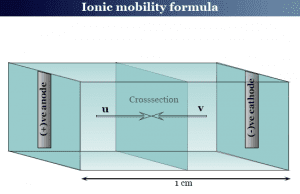
Ionic mobility table, formula, unit and measurement in electrochemistry

Ionic Mobility

Ionic mobility in electrochemistry Ionic mobility in chemistry is the velocity of an ion under a unit potential gradient or field strength. Therefore, ionic mobility...
Tin element facts, symbol, common properties like atomic number, density, melting and boiling point

Tin

Tin Element Tin is a chemical element or group 14 metal of the periodic table with the symbol Sn and atomic number 50. It is...
Facts, formula, properties, bonding and Molecular orbital diagram of carbon monoxide (CO) molecule

Carbon Monoxide

Carbon Monoxide (CO) Carbon monoxide (chemical formula CO) is a colurless, odourless, poisonous gas produced by burning carbon in insufficient oxygen. In the laboratory, carbon...
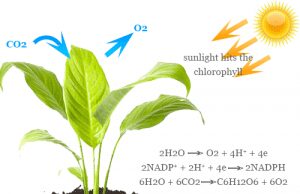
Carbon dioxide in atmosphere, molecular formula, structure, facts, uses

Carbon Dioxide

Carbon Dioxide Gas Carbon dioxide (chemical formula CO2) is a colorless, orderless gas that can be easily liquefied under critical temperature and pressure. It is...
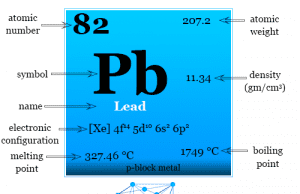
Lead metal or element symbol, facts and properties like electronic configuration, atomic number, density

Lead

Lead Metal Lead is a chemical element or group-14 metal of the periodic table with the symbol Pb and atomic number 82. It has been...
Germanium element symbol, facts and periodic table properties like atomic number and electronic configuration

Germanium

Germanium Element Germanium is a chemical element or hard, lustrous, grayish white metalloid of group-14 of the periodic table with the symbol Ge and atomic...
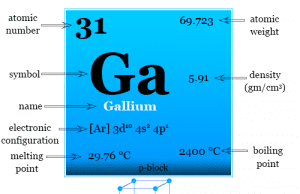
Gallium element or metal facts, symbol, properties, uses and found on periodic table

Gallium Element

Gallium Element Gallium is a p-block chemical element or soft, silvery metal of group-13 of the periodic table with atomic number 31 and symbol Ga....
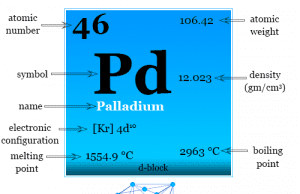
Palladium chemical element or metal symbol, properties facts, uses and found in periodic table

Palladium

Palladium Element Palladium is a chemical element or silvery white, lustrous, malleable, high density metal of group-10 of the periodic table with atomic number 46...
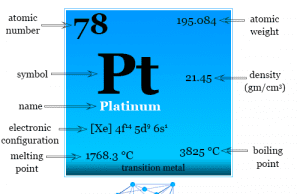
Platinum metal or chemical element symbol, properties, uses, facts and found in the periodic table

Platinum

Platinum Metal Platinum is a chemical element or silvery white, lustrous, malleable, high density metal of group-10 of the periodic table with atomic number 78...
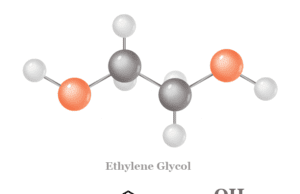
Ethylene glycol properties, formula, structure and production from ethylene oxide

Ethylene Glycol

Chemical Formula for Ethylene Glycol Ethylene glycol or ethane-1,2-diol is a colourless viscous liquid with the chemical formula (CH2OH)2. It is missable in all proportions...